The One-Metre Shop Window: Getting Your Front Door Ready for a British Year
A front door is a funny thing. It is roughly one square metre of painted timber, composite or steel, yet it does more advertising for your house than the rest of the exterior put together. People see it from the pavement, from the car, from the delivery van. They touch it, lean on it, shove it with a shoulder when their hands are full. And in the UK, it spends all year being rained on, dried out, baked by the odd heatwave and frozen solid in January.
That is why a front door repaint is rarely just a cosmetic job. It is a small, high-impact project that rewards proper preparation more than almost any other bit of decorating. Get it right and the door looks sharp for years. Rush it and you will be back out there with a scraper before the clocks go back.
Start with the building, not the paint chart
It is tempting to open a colour card and pick the shade you have seen all over Instagram. But a front door has to sit next to brick, render, stone, roof tiles, window frames and whatever the neighbours have done. Colour choices that look lovely in isolation can turn odd when they meet the actual house.
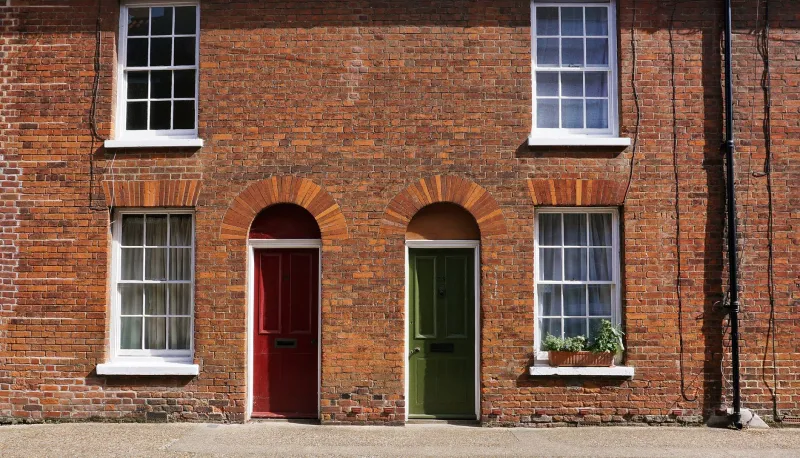
With red brick, deep greens and blues tend to feel settled and classic, while strong blacks can look very crisp on Victorian terraces. On pale render, a softer sage, muted navy or warm off-black can be more forgiving than a hard, flat primary colour. Stone cottages often suit earthier tones, but there is no rule saying you cannot go bolder if the rest of the street is quiet.
Think about light, too. A north-facing door can look darker and cooler than the same colour on a sunny south-facing front. Test a patch or a painted board in position before committing. And remember that exterior paint shifts in daylight: what looks subdued indoors can look much stronger outside.
Prep is the job you will thank yourself for
The paint gets the credit, but preparation does the work. For timber doors, start by checking the whole surface, including the bottom edge and around the lock. That is where water gets in. Scrape back any flaking coating, sand the edges smooth and dig out soft or rotten timber. Small repairs can be filled, but bigger areas of rot need cutting out and replacing rather than hiding under paint.
Wash the door down with a suitable exterior cleaner to remove grease, traffic film and general grime. Rinse and let it dry fully. Fill any cracks and sand back to a smooth finish. Bare timber needs a suitable primer, and knots may need sealing first. If the door has been painted before, check what is on it and use a compatible system rather than guessing.
Composite doors need a different approach. Do not attack them with a heavy sander. Clean them thoroughly, remove grease, and lightly key the surface only if the manufacturer allows it. Check the care instructions before using any solvent or aggressive cleaner. The same goes for aluminium or steel doors, which often need a specific primer or etch primer to help the topcoat grip.
Take the hardware off before you start. Handles, letterboxes, numbers and knockers are much easier to work around when they are not there. Mask anything that stays put, and use a decent exterior masking tape that will not leave a sticky mess on a cold day.
Pick a finish that earns its keep
Exterior paint has a harder life than interior paint. It needs to cope with UV, rain, frost and repeated movement as the door expands and contracts. A good quality exterior gloss or satin is usually the sensible choice for timber, but the right product depends on the door and the previous coating. Breathable finishes matter on some timber doors because trapped moisture is what causes peeling and blistering.
On composite doors, follow the maker's recommendations. Some finishes are designed specifically for composite and will adhere better than a standard exterior paint. Do not assume that the toughest paint for timber is automatically right for a composite panel.
Finish choice is also visual. Gloss gives a crisp, traditional look and is easy to wipe down, but it shows surface imperfections more readily. Satin is more forgiving and still hard-wearing. Eggshell can look smart on period doors, but check that it is suitable for exterior use.
The sequence that keeps you out of trouble
A front door is a small enough job that you can do it in a weekend, but only if you plan the weather. Pick a dry spell with temperatures comfortably within the paint manufacturer's range, and avoid painting in damp, windy or freezing conditions. Autumn can be tricky: mild enough one day, too cold the next. Keep an eye on the forecast and do not push your luck.
- Clear the area and remove hardware.
- Clean the door thoroughly and let it dry.
- Scrape, sand and repair any damaged areas.
- Prime bare timber and spot-prime repairs.
- Paint the edges and panels first, then the flat areas.
- Apply thin coats rather than one heavy coat.
- Leave the recommended drying time between coats.
- Refit hardware once the paint is properly dry.
- Check the bottom edge and seals, and deal with any water traps.
One more thing: do not paint yourself into a corner by closing the door before the paint is dry. Use the correct draught-proofing and painter's tape, and keep the door slightly ajar or use the right spacing so the edges do not stick.
A small job with a long memory
A front door is an advert, but it is also a working part of the house. It has to look good from the pavement and survive the British year without turning shabby by spring. Choose a colour that belongs to the building, spend the time on preparation, and use a finish that is designed for exterior life. Do that, and the one-metre advert will keep doing its job long after the scaffolding has gone.